The Intellectual Property You May Not Know You Own When businesses think of intellectual property (IP), they often associate it…

Author of this blog is an Advocate-on-Record, Supreme Court of India & Also a Patent Agent with Indian Patent Office
The Intellectual Property You May Not Know You Own When businesses think of intellectual property (IP), they often associate it…
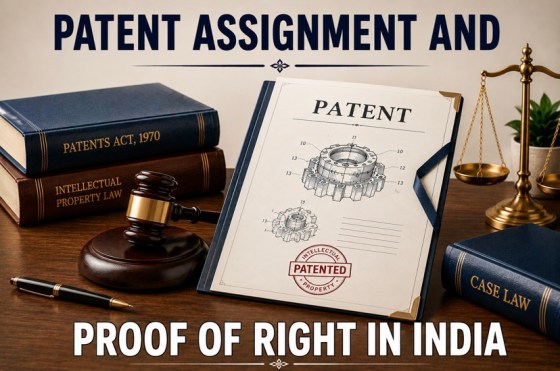
Who owns an invention created by an employee? Is a separate assignment deed always necessary to establish patent ownership? Recent decisions of the Madras and Delhi High Courts have brought much-needed clarity to the law governing patent assignments and proof of right in India. These judgments emphasize that ownership is determined by the substance of the underlying legal relationship rather than mere technical formalities. This article examines the statutory framework under the Patents Act, 1970, the distinction between assignment of the right to apply and assignment of a granted patent, and the evolving judicial approach towards employment agreements, inventor declarations, and documentary evidence establishing patent ownership.
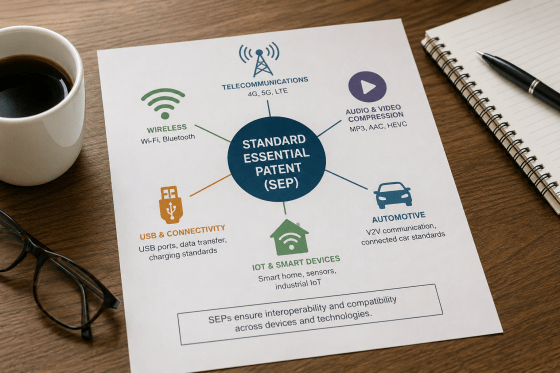
Standard Essential Patents (SEPs) form the invisible legal and technological infrastructure behind modern connectivity. From smartphones and Wi-Fi routers to smart vehicles and streaming platforms, countless technologies function through common technical standards that ensure interoperability across devices and networks. When a patented invention becomes indispensable for implementing such a standard, it transforms into a Standard Essential Patent. Because manufacturers cannot comply with the standard without using the patented technology, SEPs occupy a unique position at the intersection of patent law, innovation policy, and competition regulation. This article explains the concept of SEPs, their role across different technological sectors, and the significance of FRAND licensing obligations in maintaining balance between innovation and market access

For nearly 800 years, Nalanda survived only as ruins, memory, and legend. Once the intellectual heartbeat of Asia, the ancient university drew scholars from across the world long before modern global institutions existed. That silence has finally broken. From its destruction in the 12th century to its revival as a modern international campus in Rajgir, the story of Nalanda is not merely about rebuilding a university, it is about restoring a lost civilisational legacy.
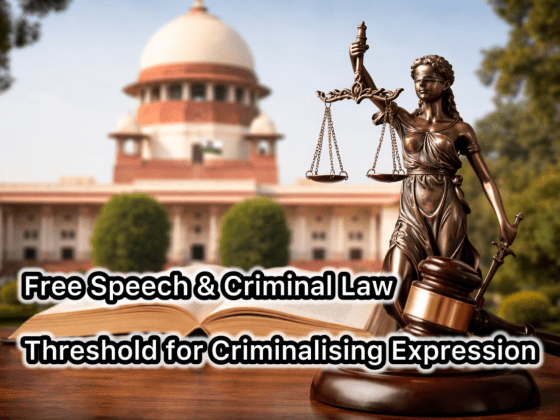
Doctrinal and procedural limits of criminalising speech, constitutional protection. Substantive thresholds and procedural safeguards under the BNSS, Supreme Court in Imran Pratapgadhi v. State of Gujarat.
The judgment in UPL vs Haryana Pesticides (2026), decided on 5 February 2026 by the Calcutta High Court’s Intellectual Property…
Does the Constitution guarantee minimum wages to domestic workers? The Supreme Court answered this in 2026. In Thozhilalargal Sangam & Ors. v.…

Cruelty in marriage does not retire with age. When an elderly husband subjects his wife to isolation, neglect, or economic and emotional abuse, it remains cruelty in the eyes of law. Old age cannot be used as a moral shield to normalise suffering, a wife’s right to dignity, safety, and respect continues for life.
Can insolvency tribunals decide trademark ownership disputes? In the Gloster trademark case, the Supreme Court clarified the limits of NCLT’s powers under the Insolvency and Bankruptcy Code and held that trademark ownership must be decided by civil or statutory forums, not within insolvency proceedings.

A creator must know these concepts to protect their rights. So I’m going to breakdown the concept of what is…

