The Intellectual Property You May Not Know You Own When businesses think of intellectual property (IP), they often associate it … More

Author of this blog is an Advocate-on-Record, Supreme Court of India & Also a Patent Agent with Indian Patent Office
The Intellectual Property You May Not Know You Own When businesses think of intellectual property (IP), they often associate it … More
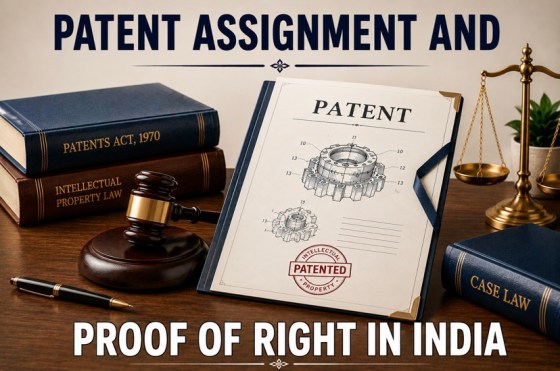
Who owns an invention created by an employee? Is a separate assignment deed always necessary to establish patent ownership? Recent decisions of the Madras and Delhi High Courts have brought much-needed clarity to the law governing patent assignments and proof of right in India. These judgments emphasize that ownership is determined by the substance of the underlying legal relationship rather than mere technical formalities. This article examines the statutory framework under the Patents Act, 1970, the distinction between assignment of the right to apply and assignment of a granted patent, and the evolving judicial approach towards employment agreements, inventor declarations, and documentary evidence establishing patent ownership.
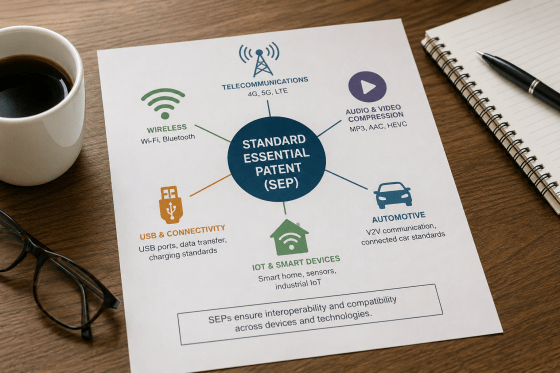
Standard Essential Patents (SEPs) form the invisible legal and technological infrastructure behind modern connectivity. From smartphones and Wi-Fi routers to smart vehicles and streaming platforms, countless technologies function through common technical standards that ensure interoperability across devices and networks. When a patented invention becomes indispensable for implementing such a standard, it transforms into a Standard Essential Patent. Because manufacturers cannot comply with the standard without using the patented technology, SEPs occupy a unique position at the intersection of patent law, innovation policy, and competition regulation. This article explains the concept of SEPs, their role across different technological sectors, and the significance of FRAND licensing obligations in maintaining balance between innovation and market access
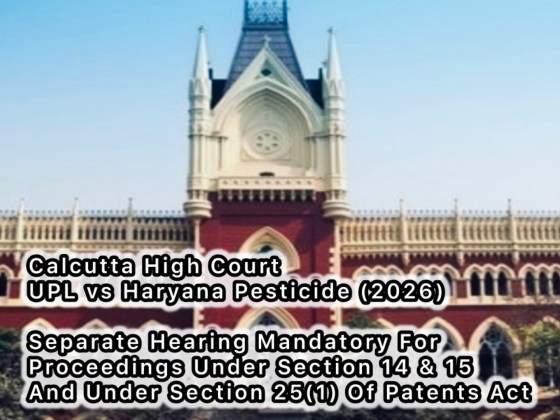
The judgment in UPL vs Haryana Pesticides (2026), decided on 5 February 2026 by the Calcutta High Court’s Intellectual Property … More

The Calcutta High Court in Google LLC v. Controller of Patents (decided on 6 August 2025), has reaffirmed the strict … More
The Delhi High Court in Kubota Corporation vs Godabari Agro Machinery and Services (12 August 2025) dealt with a significant question of territorial … More

As per news reports the new USPTO guidance restricts use of Applicant Admitted Prior Art (AAPA) in IPRs. It will … More

There are several types of agreements used to transfer patented technology, depending on the purpose, rights, and nature of the … More
In Nippon Steel Corporation vs Controller General Of Patents, Designs, The High Court of Delhi in it’s decision dated 29 … More

Navigating through the web of patent thickets, obtaining necessary licenses is often a cause of concern for small and medium … More

